
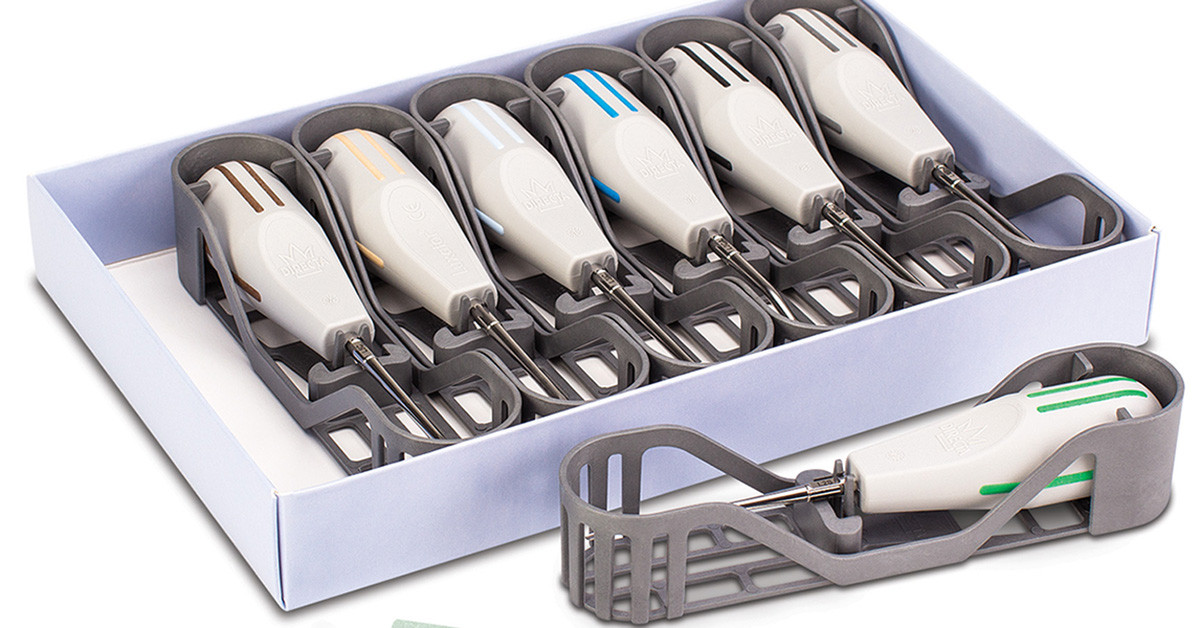
Luxator vs. Elevator: What’s the Difference?
Posted by Practicon, Inc on 8th Oct 2026
Luxator vs. Elevator: What’s the Difference?
Luxators and elevators may look similar on the tray, but they are not interchangeable. The luxator vs elevator difference comes down to the job each instrument is designed to do: a luxator-style periotome helps separate the periodontal ligament, while a conventional elevator uses controlled force to loosen a tooth or root.
Knowing which one to reach for, and when, starts with understanding the working end.
Core Design Differences
Take a closer look at the blade. A luxator-style periotome has a thin, sharp, tapered blade designed to enter the periodontal ligament space. A conventional elevator generally has a thicker, sturdier working end designed to handle controlled wedging and leverage.
|
Feature |
Luxator-style periotome |
Conventional elevator |
|
Working end |
Thin, sharp and tapered |
Generally thicker and sturdier |
|
Main job |
Separate periodontal ligament fibers |
Mobilize teeth or roots |
|
Important limitation |
Not designed for heavy prying |
Requires careful positioning and controlled force |
The names can get a little confusing. Some instruments are sold as “luxating elevators” but have thin, sharp blades intended for ligament separation. Check the manufacturer’s instructions rather than assuming every instrument with “elevator” in its name works the same way.
Function and Best Clinical Uses
Think of a luxator-style periotome as a ligament-separating instrument, not a pry bar. Its fine blade works within the periodontal ligament space to cut fibers and gently create room around the root. It can be useful early in an extraction when limiting tissue disruption is a priority.
A conventional elevator comes into play when the tooth or root needs additional mobilization. Depending on its design and placement, it works through controlled wedging, rotation or leverage. Elevators also disrupt ligament attachments, so there is some overlap in what the instruments accomplish, but not necessarily in how they should be handled.
Neither is the better choice for every extraction. Root anatomy, tooth condition and access all influence instrument selection. Healthy adjacent teeth should not be used as routine fulcrums for elevator force.
Stock Your Extraction Tray
When you’re reviewing your extraction setup, look beyond the instrument name. Consider the blade design, size and curvature that suit the work you do.
Practicon’s Hu-Friedy Black Line Luxating Elevator is designed for periodontal ligament separation and offers straight and curved blade options. Its matte black finish helps reduce reflections during use.
Frequently Asked Questions
What’s the main difference between a luxator and an elevator?
A luxator-style periotome primarily separates periodontal ligament fibers. A conventional elevator uses controlled forces to loosen teeth or roots.
Can I use a luxator like an elevator?
Not if it’s a thin-bladed periotome. Heavy prying can damage the instrument; use it only as directed by the manufacturer.
Do I need both for every extraction?
No. Some cases may call for both, but instrument selection depends on the tooth, root anatomy and extraction approach.