
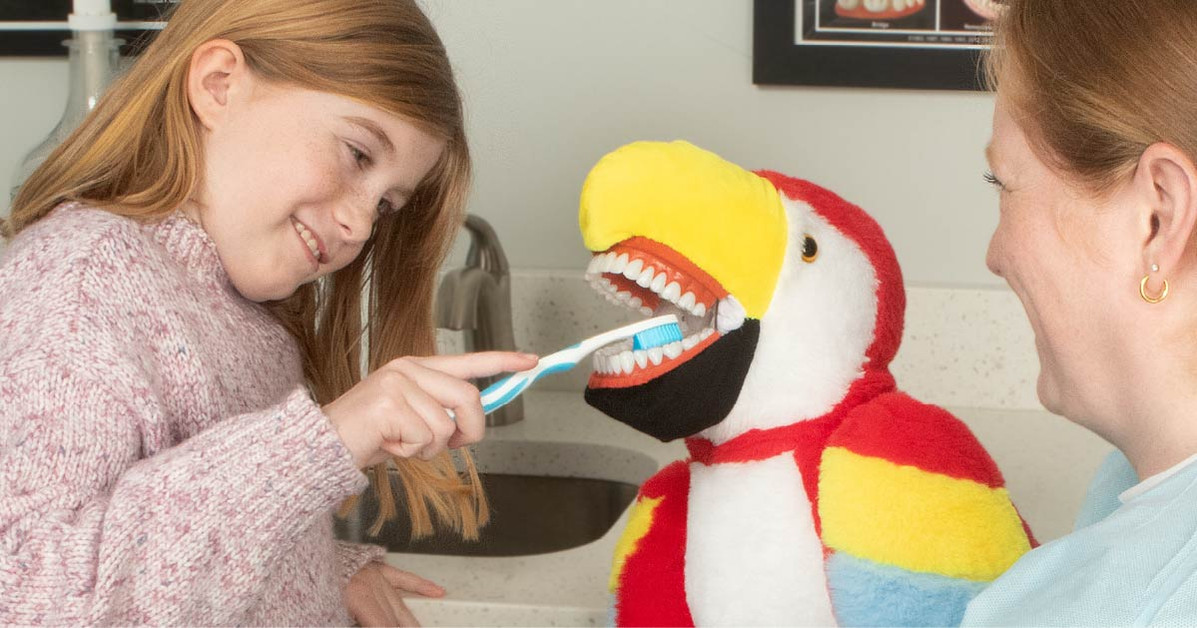
Patient Education Tools That Increase Case Acceptance
Posted by Practicon, Inc on 2nd Sep 2026
Every practice has heard the same story from the front desk: the treatment plan looks great on paper, the patient nods along at the consult, and then… crickets. No scheduled procedure, no callback, no case.
The gap between "presenting treatment" and "accepting treatment" is almost never about price. It's about clarity and trust. Patients say no when they can't visualize their problem, don't understand the fix, or don't feel confident in the recommendation.
That's where dental patient education tools come in. When you give patients something to see, hold, and take home, you move them from passive observer to active partner in their own care and case acceptance follows.
Education First, Acceptance Second
You can't expect a patient to say yes to treatment they don't understand. Periodontal disease, deep decay, orthodontic correction, and cosmetic restorations are abstract concepts to most people. They've never seen a full-mouth debridement. They can't read a radiograph. They only know what you tell them and words alone rarely close the deal.
Research on high-performing practices points to the same strategy repeatedly: show before you tell. When you open with a visual, an image, a chart, a model, you make the problem concrete instead of theoretical. A patient who sees gum recession on a giant model understands "periodontal disease" a hundred times faster than a patient who only hears the term.
The psychology is simple: comprehension builds trust, and trust builds acceptance. The more your patient understands what's wrong, why it matters, and what you're going to do about it, the more the recommendation feels like their decision rather than a sales pitch.
Three Tools That Turn Education Into Acceptance
- Dental educational models
Nothing replaces the power of a physical model in the operatory. When you hold up a life-sized model showing healthy teeth next to a model showing decay, cracks, or periodontal attachment loss, the patient instantly sees their condition in 3D.
Practicon's life-sized removable case models and treatment models are built for exactly this moment. They let you demonstrate everything from cavity progression to implant restoration right at the chair.
For hygiene instruction, typodont and hygiene models like the Hygiene Demo Model put the focus on technique, not theory. Its whiter, straighter teeth and fully flossable gingiva make brushing and flossing easy to demonstrate and even easier for patients to replicate at home.
- Dental charts
Dental charts take the guesswork out of visualizing a problem. A periodontal chart, an example of bone loss, or an anatomy chart turns a complex diagnosis into something your patient can point at and understand.
Pair the visual with a plain-language explanation: "This darker area is decay that has reached the layer under the enamel. If we wait, it's very likely to reach the nerve and need a root canal instead of a filling."
The chart makes the consequence of waiting visible and that's often the turning point for acceptance. Patients don't just need to understand what you're fixing today; they need to see what happens if they don't fix it.
- Patient take-home kits
Case acceptance rarely happens in a single appointment. Patients go home, talk it over with a spouse or family member, and decide there. If they leave with nothing, they leave with your words fading fast.
Take-home patient education materials such as brochures, care reminder cards, and DHE resources from Practicon's own-brand education line extend your consultation beyond the operatory. They reinforce your message when you're not in the room, so the patient hears your recommendation again just before they schedule.
Pro tip: send a take-home kit home with every patient who says "I need to think about it." You'll be surprised how often that small follow-through converts a maybe into a yes.
The Acceptance-Ready Operatory Checklist
Set your team up to educate first and schedule second:
- Stock each operatory with a treatment model and a hygiene/typodont model at arm's reach.
- Use the same models and the same language across every provider so messaging stays consistent.
- Show before you tell — open with the visual, then explain in plain words.
- Quantify the risk — mention the consequence of waiting in concrete terms.
- Send it home — always close the consult with a take-home education piece.
Education Never Comes Back Bite-Sized
Here's the reality most practices miss: a patient's decision to say yes starts the moment they understand their condition — not the moment you present pricing. Because it's rarely about the cost. It's about confidence.
When you educate first, you build trust. And when you build trust, patients don't just accept treatment — they choose it. Give your team the tools to make every consult visual, every message consistent, and every patient informed.
Frequently Asked Questions
What are dental patient education tools?
Dental patient education tools are physical and take-home resources — educational models, charts, and patient materials — that help dentists explain conditions and treatments visually so patients understand and accept their care.
Why do patient education tools increase case acceptance?
They make an abstract problem concrete and visible, which builds patient comprehension and trust in the recommendation. Patients who understand their condition and the risk of waiting are far more likely to schedule treatment.
Which education tools should every operatory have?
At minimum: a treatment or case model, a typodont/hygiene model for home-care demos, and a patient take-home kit to reinforce the message after the visit.
How do take-home kits help case acceptance?
Patients often decide after the appointment. Take-home materials reinforce your recommendation when the patient is home, keeping the treatment at the front of their mind and reducing the chance they forget or delay.
Ready to educate your patients and grow your practice? Shop patient dental health education today and find models, charts, and take-home kits that turn understanding into acceptance.