
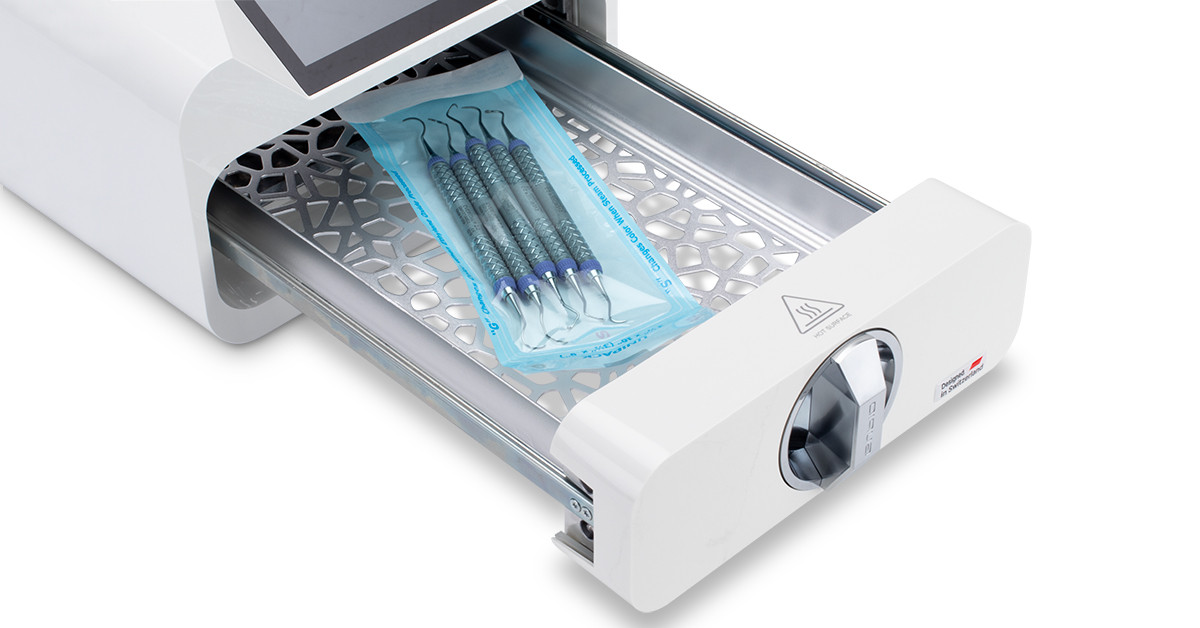
How to Choose the Right Dental Autoclave for Your Practice
Posted by Practicon, Inc on 10th Jun 2026
Choosing the right dental autoclave comes down to four key factors: capacity, speed, cost, and maintenance. Understanding how each impacts your workflow can help you select the best sterilizer for your practice.
Capacity
Autoclave capacity determines how many instruments can be processed per cycle. 8–12L units are ideal for small or start-up practices, 16–23L models fit most general dental offices, and 24L+ units are best for high-volume or specialty practices. For many offices, a 16–23L chamber provides the best balance of throughput and value.
Speed
Cycle time affects instrument availability and daily efficiency. Compare the total cycle time—including sterilization, drying, and cooling—not just the sterilization phase. Faster cycles can reduce bottlenecks and improve workflow in busy practices.
Cost
Don't focus solely on the purchase price. Consider energy and water consumption, preventive maintenance, replacement parts, service contracts, and downtime risk. The lowest-priced autoclave is not always the most cost-effective long-term solution.
Maintenance
Routine maintenance impacts reliability and lifespan. Look for easy-to-clean chambers, replaceable filters, automatic diagnostics, and strong local service support. Using distilled or deionized water can also help extend equipment life.
Class B vs. Class N Autoclaves
Most dental practices choose Class B autoclaves because they can sterilize wrapped, hollow, porous, and solid instruments commonly used in dentistry. Class N autoclaves are generally limited to unwrapped solid instruments and are rarely used as the primary sterilization solution in modern dental offices.
Quick Comparison Guide
|
Factor |
What to Consider |
|
Capacity |
Match chamber size to patient volume |
|
Speed |
Compare total cycle times |
|
Cost |
Evaluate total ownership costs |
|
Maintenance |
Consider service and support requirements |
Compare Dental Autoclaves and Get Expert Recommendations
The right autoclave depends on your patient volume, instrument demand, and workflow requirements. For many dental offices, a 16–23L Class B autoclave provides the ideal combination of capacity, speed, compliance, and value.
FAQ 1
What size autoclave does a dental practice need?
The right autoclave size depends on your patient volume. 8–12L units are best for small or start-up practices, 16–23L models are ideal for most general dental offices, and 24L+ units suit high-volume or specialty practices.
For most general dentists, a 16–23L chamber offers the best balance of throughput and value.
FAQ 2
What is the difference between a Class B and Class N dental autoclave?
Class B autoclaves use pre-vacuum cycles to sterilize wrapped, hollow, and porous instruments, making them the standard choice for most dental practices.
Class N autoclaves are limited to unwrapped solid instruments and are rarely sufficient as a primary sterilization solution in a modern dental office.
FAQ 3
How long does a dental autoclave sterilization cycle take?
Total cycle time includes sterilization, drying, and cooling phases, not just the sterilization phase itself.
Cycle times vary by model and load type but typically range from 20 to 60 minutes. Faster cycle times help reduce instrument turnaround and improve daily workflow efficiency in busy practices.
Ready to compare dental autoclaves? Request personalized product recommendations and find the best sterilization solution for your practice.